

How Nippon Sanso Matheson is connecting commerce, data and service
Brian Smith, Digital & eCommerce Transformation Leader at Nippon Sanso Matheson, discusses the work behind a connected approach to commerce, CRM and service.

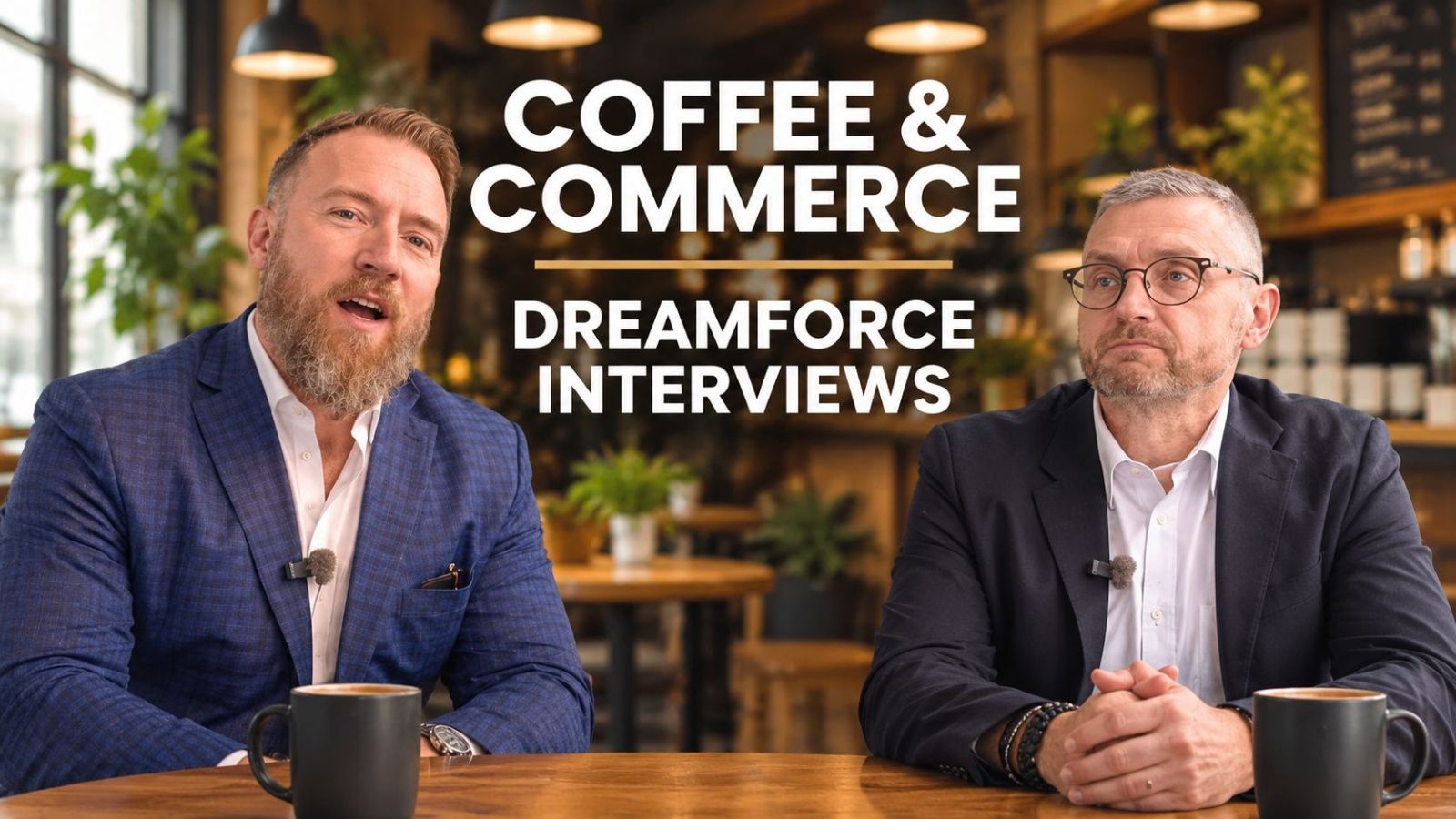
An eCommerce project can expose problems well beyond the storefront. That is what Brian Smith found when he joined Nippon Sanso Matheson and began examining how its commerce systems connected to the rest of the business.
Smith initially set out to consolidate the company’s eCommerce work. As he followed the integration points, the scope widened to include CRM, marketing and the data feeding those systems. Updating an underused CRM without addressing the underlying problems, he reasoned, would simply move those problems to a new platform.
This isn’t just a commerce project, Smith told Caleb Bryant, Senior Director, Product Management (Commerce Cloud) at Salesforce, in a Coffee and Commerce interview at Dreamforce 2026. There’s a lot of other things that need to transform and need to change.
Start with the accounts
For Smith, the immediate challenge was knowing whether the company could trust the records it planned to move into its new systems. Duplicate accounts, inconsistent account structures and informal notes stored in the wrong fields had become part of everyday work. Staff sometimes created a new account because finding the right one was harder. That could even create disputes over which salesperson owned the customer relationship.
Is this data you want to carry into a new system and trust it for your decision making? he asked. You can build the greatest system in the world, but if you put crap data into it, you can’t rely on it.
Smith took the issue to Nippon Sanso Matheson’s executive team and argued for a master data management strategy. The work includes removing duplicate records, correcting parent and child account relationships, and setting rules for how information enters Salesforce. With hundreds of thousands of records to address, he said the company invested in Informatica to help clean them up at scale.
The point is practical: a new CRM, commerce platform or AI tool can only act on the customer information it receives. If account ownership and relationships are unclear, adding another interface will not resolve the confusion for sales or service teams.
Connect service to the customer journey
The company’s work also extends beyond transactions. Smith described substantial service activity, from site surveys and construction through installation and planned maintenance. Each stage creates customer interactions that the company wants to connect more effectively.
He sees potential for digital assistants to help employees find information and move between workflows, including through Slack. But he framed that as a use case to build into the way the business operates, rather than a benefit that arrives automatically with the technology.
The harder question now is adoption. Smith wants sales and service staff to see that the new tools can reduce administrative work and give them more time for customers. That will depend on what the tools actually do for people in their daily roles.
The proof’s in the doing, he said. Give people tools that make the work easier and remove some of the administrative tasks that take time away from selling and service.
Smith expects the first launch to be the beginning of that process. Once teams are using the systems, Nippon Sanso Matheson can see what works, address friction and keep improving them. His account is a useful reminder for manufacturers and distributors: the value of a commerce investment often depends on the less visible work of cleaning customer data, connecting service processes and earning adoption across the business.
Based on Caleb Bryant’s Coffee and Commerce interview with Brian Smith at Dreamforce 2026.