

AI Buying Agents Need a Trusted Product Data Layer: Search Vendors Want to Own It
Search platforms like Algolia, Coveo and Hawksearch are positioning themselves as the retrieval layer connecting AI buying agents to live B2B product, pricing, inventory and merchandising data.

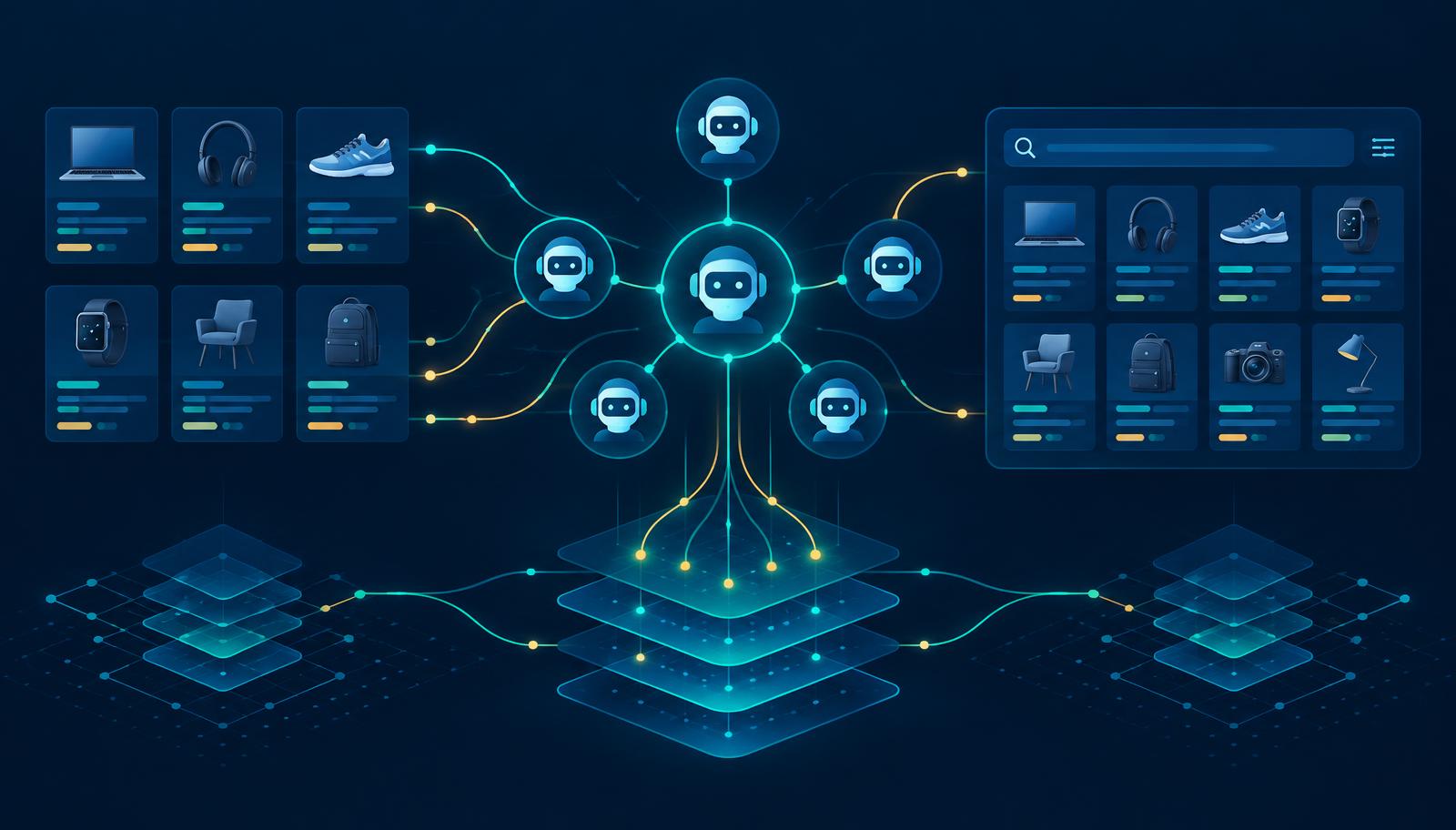
AI buying agents are starting to change the role of search in B2B commerce. Traditionally, search platforms helped buyers find the right product on an ecommerce site. Now they are increasingly being positioned as the retrieval layer that connects AI applications to live product, pricing, inventory and merchandising data.
Algolia’s September 15 launch of a production-grade Model Context Protocol server is a good example. The company says it allows AI applications and agents to access live commerce data, including product search, facets, pricing, inventory and merchandising context. The broader significance is that search vendors are moving beyond the search box and into the infrastructure that could power AI buying assistants.
Why this matters for B2B
For manufacturers and distributors, the challenge is more complex than exposing a product catalog to an AI model. Buyers may search using old part numbers, technical descriptions, compatibility requirements or account-specific terms. Pricing, availability and assortment may also vary by customer.
An AI agent therefore needs more than product descriptions. It needs access to structured product data, technical attributes, business rules and customer context. Search platforms already manage many of these elements through relevance, synonyms, ranking, attributes and merchandising logic, which gives them a natural opportunity to become the layer that connects enterprise data to AI interfaces.
Coveo and Bloomreach are moving in a similar direction. Coveo already supports MCP-based access to enterprise search and retrieval capabilities, while Bloomreach is connecting search and conversational discovery through its Loomi platform.
Search governance becomes more important
In industrial commerce, the accuracy of an AI-generated recommendation matters. A wrong answer involving a replacement part, technical specification or compatible component can create bigger problems than a poor retail recommendation.
This puts more emphasis on governance. B2B teams will need to understand what information an AI system retrieved and why it produced a particular answer. Coveo’s Conversation Inspector, for example, allows teams to review the query, generated response and passages used to create that response.
Product data remains the foundation
Generative and semantic search can improve how buyers express intent, but they do not remove the need for strong product data. Manufacturers and distributors still need accurate attributes, taxonomy, compatibility information, technical documentation and structured product content.
In many cases, agentic commerce may make those foundations even more important. AI can interpret the buyer’s question, but it still depends on the quality of the information it can retrieve.
A broader role for Search & Discovery
Search technology has traditionally been evaluated around relevance, filtering, merchandising and zero-result searches. Those questions remain important, but B2B teams may soon need to ask a broader set of questions: can our search infrastructure expose trusted product intelligence to AI agents, respect account-specific rules and explain why a particular product was recommended?
Algolia, @Coveo, Bloomreach and others are increasingly positioning themselves around that opportunity. For manufacturers and distributors, Search & Discovery is starting to move from a website feature toward a much more strategic part of the AI commerce stack.